

The ground beneath you feels solid, inert, and unremarkable when you stand in almost any old forest, such as the dense Douglas Fir stands of British Columbia or a beech wood in rural Germany where the light comes through in broken patches. It isn’t. A few centimeters below the surface, beneath that dark soil and leaf litter, is a network so extensive and ancient that it makes the internet seem like a relatively new experiment. Scientists have come to refer to it as the “wood wide web,” and although that term seems lighthearted, the concept it describes is actually quite challenging to comprehend.
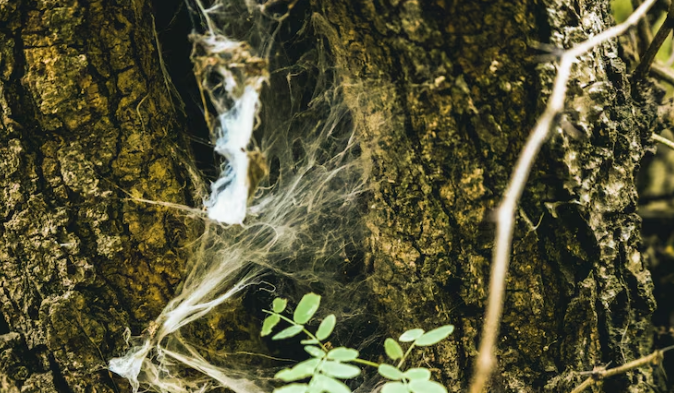
Fungi are the foundation of the network. In particular, mycorrhizal fungi—organisms that were long thought to be mainly dangerous to plant life because they spread illness and decay. Over the past thirty years, that perspective has significantly changed, giving way to something much more intriguing. These fungi develop into tiny tubes known as hyphae, which are so thin that several kilometers of them can be found in a single handful of forest soil. In what biologists refer to as a symbiotic relationship, the hyphae bundle together to form mycelium, which subsequently adhere to and entwine with the roots of plants and trees.
| Category | Details |
|---|---|
| Common Name | Wood Wide Web |
| Scientific Term | Mycorrhizal Network |
| Network Age | Approximately 500 million years old |
| Network Structure | Hyphae → Mycelium → Mycorrhizal root associations |
| Land Plants Connected | Up to 90% of all land plant species |
| First Global Map | Produced by ETH Zurich & Stanford University (Crowther Lab) |
| Data Source Used | Global Forest Initiative — 1.2 million forest plots, 28,000 species |
| Countries Covered | More than 70 countries |
| Key Researchers | Prof. Thomas Crowther (ETH Zurich); Suzanne Simard (UBC Canada) |
| Popular Reference | Peter Wohlleben — The Hidden Life of Trees |
| Exchange Mechanism | Trees provide carbon sugars; fungi provide water, phosphorous, nitrogen |
| Cultural Reference | James Cameron’s Avatar — the fictional Eywa network |
| Published In | Nature journal |
| Climate Role | Limits carbon release; vulnerable to climate change |
| Debate Status | Some researchers question extent of tree “communication” claims |
The tree provides the fungus with carbohydrates made by photosynthesis, which the fungus cannot produce on its own because it lacks leaves. In exchange, using enzymes that the tree lacks, the fungal filaments push outward through the soil, drawing in water, phosphorus, and nitrogen and returning them along the network. It is a trade in the strictest sense of the word.
The fact that the trading extends beyond individual root-to-fungus exchanges is what truly surprises people about the Wood Wide Web. Trees of different species are not the only ones connected by the network. Suzanne Simard, a forest ecologist at the University of British Columbia, spent decades tracking the flow of nutrients between Douglas Fir and Birch, showing how trees that appear to be rivals can actually be subtly feeding one another under specific circumstances.
Similar findings were discussed by German forester Peter Wohlleben in his book The Hidden Life of Trees, which popularized this underground world in a way that scholarly articles seldom do. There’s a feeling that the public was prepared for this concept—perhaps weary of viewing nature as wholly hostile and finding some subtly comforting evidence of subterranean cooperation.
Researchers from Stanford University and the Crowther Lab at ETH Zurich created the first global map of these mycorrhizal networks using a database from the Global Forest Initiative that included 1.2 million forest tree plots from more than 70 countries and 28,000 species. The team created a picture of this fungal world at the planetary scale by using machine learning to model from millions of direct ground observations. According to Prof. Thomas Crowther, it was the first time that scientists had a truly global understanding of what lies beneath our feet. It’s worth sitting with that framing. Humans are just now starting to fully understand this network, which is almost 500 million years old and predates land vertebrates by a significant margin.
However, it’s important to be truthful about the areas where the science is questioned. According to a 2023 New Scientist review, there is less evidence to support some of the more widely held beliefs about tree communication, such as the notion that forests act as cooperative communities that purposefully share resources and send distress signals. There are actual mycorrhizal networks. There is a documented and actual nutrient exchange. It is still up for debate, though, whether trees are “communicating” in any meaningful intentional sense or if the network is more like plumbing than dialogue. It’s possible that the story’s cultural demand has surpassed what the data currently supports. In science, that is not out of the ordinary. Although it’s uncomfortable, this is common.
Beyond its biological significance, all of this is important for a wider reason. The way forests store and cycle carbon is now known to be intimately related to mycorrhizal networks. Carbon dioxide is absorbed by healthy trees, which are supported by robust fungal networks. In ways that are still being measured and understood, disruptions to the network, such as soil compaction, agricultural chemicals, deforestation, or climate stress, weaken that carbon sink. In particular, the Crowther Lab study highlights how crucial these networks are to mitigating climate change and how vulnerable they are to its consequences. The very subterranean systems that support forests’ ability to withstand warming are harmed by a warming climate, creating an unsettling cycle.
Keeping this in mind while strolling through any forest slightly alters the experience. The floor doesn’t feel as passive. Knowing what’s going on beneath your feet—centuries of exchange, kilometers of thread, the slow chemistry of a system that was already ancient when the first forests appeared—makes the soft give of damp soil seem different. Something genuine and complex is taking place down there, regardless of whether trees are communicating in the manner that Avatar envisioned. It’s sufficient to change the way even a skeptic views an old oak.
