

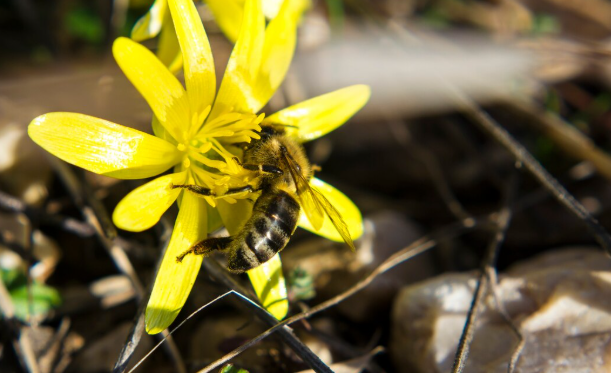
One of the oldest sounds in the natural world, the low, deliberate hum that moves between lavender and clover, may still be audible if you stroll through a garden on a warm afternoon. However, if you pay close attention, something has changed over the last ten or so years.
There is less hum. Anyone who has spent time outdoors across generations can sense it, even if they can’t quite put their finger on it. It’s not gone, not yet, but noticeably diminished. Scientists are able to identify it. They have been doing this for years in papers, reports, and congressional fact sheets that the general public briefly peruses before putting them aside because it is truly difficult to comprehend the full impact of pollinator loss while standing in a supermarket that still appears to be mostly full.
| Topic Overview: Global Pollinator Decline | |
|---|---|
| Subject | Worldwide Decline of Bee and Pollinator Populations |
| Scale of Dependency | 87.5% of flowering plant species depend on animal pollination |
| Food Crop Dependency | 87 of the world’s leading food crops rely on pollinators |
| Annual Economic Value | USD $235 billion – $577 billion in global food production |
| Pollinator Decline Rate | ~25% reduction since 1987 (JNCC); bee species down ~25% since 1990s |
| North America Bumblebee Loss | 50% reduction in sightings vs. pre-1974 levels |
| California Hive Loss (2024–25) | Average 60% colony loss reported by beekeepers |
| Key Threats | Pesticides, habitat loss, climate change, parasites, light/air pollution |
| Affected Foods | Fruits, vegetables, nuts, coffee, cocoa, avocados, almonds, kiwi |
| Nutritional Risk | Potential vitamin A deficiency for 71M+ people if pollinators fully collapse |
| Key Conservation Body | The Xerces Society for Invertebrate Conservation |
| Reference Website | https://earth.org/ |
The Joint Nature Conservation Committee reports that pollinator populations have declined by nearly 25% since 1987. The number of bee species worldwide decreased by about a quarter in the ten years between 2006 and 2015 compared to levels prior to 1990, according to a 2021 global assessment based on more than a century of records. In North America, the likelihood of seeing a bumblebee in any given location is now about half of what it was prior to 1974. These are not forecasts. These are measurements of an ongoing process that is changing ecosystems in ways that compound gradually before abruptly changing at a particular threshold.
The numbers become truly shocking when you consider the food connection. Pollinators are directly responsible for between $235 billion and $577 billion of the world’s food production each year; this wide range reflects the real uncertainty that researchers have regarding the extent of the dependency. Eighty-seven of the most important food crops in the world depend in some way on animal pollination.
The majority of fruits, numerous vegetables, almonds, coffee, cocoa, avocados, and kiwis are all on that list. Cocoa beans alone account for about $5.7 billion in the global chocolate industry each year. Chocolate is made from the seeds of the cacao tree and is pollinated by certain midges. There is no metaphorical relationship between the disappearance of food and insects. It is direct and biological.
In a way that is difficult to ignore, California made this concrete. A shortage of up to 500,000 hives, which were thought to be crucial for almond pollination, was reported by beekeepers throughout the state between June 2024 and February 2025, with average colony losses of about 60%. Most almonds in the world are produced in California.
The farms continued to operate, but the strain on the surviving colonies increased, driving up prices and hastening a discussion among farmers about what happens when the biological labor force they have always relied on is no longer dependable. Another option is hand pollination. Tests are being conducted on drone pollination. Due to millions of years of co-evolution with flowering plants, bees have developed an approach that is far more efficient, cost-effective, and large-scale than either.
It’s difficult to ignore the fact that the reasons for this decline read like a synopsis of contemporary industrial priorities piled on top of the requirements for bee survival. The fields where bees graze are covered in pesticides and herbicides. Growing a single crop over large areas of land is known as monoculture farming, and it eliminates the floral diversity that healthy colonies rely on for nourishment.
Nesting sites and food sources are simultaneously eliminated as urbanization replaces meadows and wild hedgerows with pavement and well-kept lawns. The timing of flowering seasons is altered by climate change, resulting in mismatches between when plants bloom and when pollinators return from winter. The volatile scent molecules that flowers use to attract pollinators are bonded to by air pollution, such as ozone and nitrate radicals from vehicle emissions. This reduces the pollinators’ range and increases the difficulty and energy required to find food. Each of these pressures intensifies the others.
Beyond the foods themselves, there are significant nutritional ramifications. Global fruit supply would decline by about 23%, vegetable supply by 16%, and nuts and seeds by 22%, according to research simulating a total collapse of pollinators. With an estimated 71 million more people experiencing deficiency in low-income countries, vitamin A, which is already severely lacking in a significant portion of the world’s population, would become extremely scarce.
Over time, the effects of animal-pollinated oil crops on folate, vitamin C, and lipids would also have an impact on human health outcomes. These predictions are not meant to frighten. They are the results of rigorous scientific modeling applied to a trend that is already quantifiable and headed in the right direction.
Speaking with anyone who deals directly with these problems gives the impression that there is a real but limited window of opportunity to stop the worst of the decline. These interventions, which include rewilding degraded land, lowering the use of chemical pesticides, planting native flowering species, and helping local beekeepers maintain healthy colonies through careful husbandry, are recognized, accessible, and, in some cases, already in use. A few governments are in motion.
The Obama administration suggested spending $50 million in 2014 to maintain pollinator habitat and increase conservation reserves. Legislation pertaining to pollinator health has been passed in about eighteen US states. Certain neonicotinoid pesticides associated with bee mortality are restricted by the European Union. There is progress. The gap that usually matters most in these situations is that it is simply moving much more slowly than the problem it is responding to.
The bees are still at work. However, the circumstances surrounding them are becoming more stringent, season by season, in subtle ways that become more noticeable in the increasing intervals between hums.
